





The rental market is the toughest it’s been in 20 years. That’s exactly why you need a manager who delivers results
The Wall Street Journal is covering the surge of accidental landlords across the Sunbelt. Zillow and Redfin data confirm it. But the national coverage is barely scratching the surface of how difficult this market actually is for the people living it day to day. After more than 20 years in the housing industry, we can say without hesitation: this is as bad as we have ever seen it. And the landlords who are going to survive it are the ones who understand why.
The WSJ profiles homeowners like Jim and Lindy Kennedy in Bluffton, S.C., who listed their home in February 2025 and found almost no buyers willing to look at it. Their story is playing out thousands of times across our markets. Denver is now the accidental landlord capital of the country, with 4.9% of rentals being former failed sale listings. Seven of the top ten metros for accidental landlords are in Texas or Florida. Nashville, Charlotte, and Atlanta are all deep in buyer’s market territory with sellers outnumbering buyers by record margins.
The national media frames this as a for-sale market story. But the rental market implications are where the real pain is accumulating, and where the real opportunities exist for landlords who make the right decisions.
We need to talk about what this market actually looks like from the trenches.

This is not a normal downturn
We have managed rental properties through the 2008 financial crisis, through the chaos of COVID lockdowns and moratoriums, through the rate shock of 2022, and through every seasonal dip and surge in between. This market is different from all of them, and it is different because the pain is coming from so many directions simultaneously.
The cost of construction is dramatically higher than what you can sell or rent an average-sized project for. Labor shortages driven by retirements, immigration enforcement, and AI infrastructure competition have pushed skilled trade costs to levels that break the math on most new development. Materials remain elevated. Insurance has surged, particularly in Sunbelt markets. HOA fees have spiked as associations pass through higher maintenance and insurance costs to unit owners.
The result is that an incredibly huge number of investments simply do not make financial sense anymore. We are not talking about marginal deals that are borderline. We are talking about entire categories of real estate investment that have become structurally unprofitable for the average owner.
We outlined this in detail in our recent analysis of how rising HOA fees have essentially killed buyer appetite for condos, where prices posted their biggest annual declines since 2012 and more than one in ten condos are now estimated to be worth less than their most recent sale price. We also covered the flip side in our piece on why a rental property fence could be the best investment you make, demonstrating that low-maintenance, high-impact improvements with a direct payback period under 5 years are outperforming nearly every other strategy available to landlords in this environment.
The common thread is that high-cost, high-maintenance investment strategies are being crushed by inflation, labor costs, and competition, while simple, durable, practical investments are holding up. That distinction is going to determine which landlords thrive over the next several years and which ones exit the business entirely.
Not sure if your rental investment still makes financial sense?
We do thousands of rental rate estimates every year. Get an honest, data-driven assessment of what your property should be earning and whether the numbers work in today’s market.
Get Your Free Rental EstimateThe vacancy problem is worse than the headlines suggest
As the market has deteriorated, we are seeing something deeply counterintuitive from a management perspective: owners are becoming dramatically more willing to accept vacancy. They would rather let their property sit empty than reduce the asking rent to a level the market will support.
We understand the psychology. Nobody wants to go backward. Nobody wants to accept that their home is worth less as a rental than it was two years ago, or that their mortgage payment has nothing to do with what a resident will pay. Pride is a powerful force, and it is one of the most expensive emotions in rental investing.
But we have to be direct about the math because the math does not care about feelings.
Vacancy costs $60 to $100 per day in our markets. Not just lost rent, but utilities on an empty home, lawn maintenance, insurance exposure, HOA dues, mortgage payments, and the compounding risk of an unoccupied property where a small leak can become a five-figure disaster because nobody was there to catch it.
If your unit is vacant for 33% of the year, which is not uncommon these days, and you also made poor strategic decisions that led to heavy turnover year after year, you will find it very unfulfilling and very hard to make a profit. That is the polite version. The blunt version is that you are actively destroying the wealth this property was supposed to build.
This is the point we make constantly because it is the single most important concept in rental investing and the one that owners resist the most: even at a significant discount from what you believe the home should rent for, an occupied property with a quality resident generating monthly income can absorb higher insurance premiums, rising maintenance costs, HOA increases, and every other escalating expense that is squeezing landlords right now. Cash flow covers costs. Vacancy covers nothing.
An owner who rents at $1,800 when they wanted $2,100 has $21,600 in annual revenue to work with. An owner who holds out for $2,100 and sits vacant for four months has $16,800 in revenue, assuming they eventually get their price, which they usually do not. More often, they end up reducing to $1,900 after chasing the market down for months, netting even less than the owner who priced it right from day one.
| Strategy | Monthly rate | Vacancy | Annual gross revenue |
|---|---|---|---|
| Price at market ($1,800), lease in 3 weeks | $1,800 | ~3% | $20,952 |
| Price above market ($2,100), lease in 8 weeks | $2,100 | ~15% | $21,420 |
| Price above market ($2,100), chase down 4 months, land at $1,900 | $1,900 | ~33% | $15,200 |
The third scenario is what we see play out repeatedly, every year, across all of our markets. And the owner in that scenario is not just losing revenue. They are also attracting a lower-quality resident pool because the people who are still looking after a home has been sitting for months tend to be the ones who were rejected everywhere else. Quality residents find value early. They do not wait around for overpriced listings to finally come down.

Vacancy is the most expensive mistake a landlord can make
We have nearly 20 years of data showing that competitive pricing, quality resident placement, and strategic lease timing produce dramatically more net income than holding out for a higher rate. Let us show you what your property should be earning.
Get Your Free Rental EstimateA lot of investments do not make sense anymore
This is a hard truth that the industry does not talk about enough. Not every rental property is a good rental property. And in this market, a significant number of investments that worked three or four years ago have become structurally unprofitable.
Condos are the most obvious example. We outlined a decade ago that condos would likely underperform the broader market due to the relentless flow of new apartment competition, and that prediction has been validated in ways that even we did not fully anticipate. Condo prices posted their biggest annual declines since 2012. Rising HOA fees are adding $300 to $500 per month to an owner’s cost basis without proportionally increasing rental income. Insurance costs are surging, particularly in Florida. And condo associations are passing through special assessments for deferred maintenance that can run into five figures.
If you own a condo in one of our markets and your combined mortgage, HOA, insurance, and tax cost exceeds what the rental market will bear, that is not a pricing problem. That is a structural problem. No amount of management expertise can make a fundamentally unprofitable investment profitable. The best we can do is minimize the losses and help you develop a plan, whether that is holding at a reduced rate while waiting for the market to shift, or cutting your losses and selling at a price the market will accept.
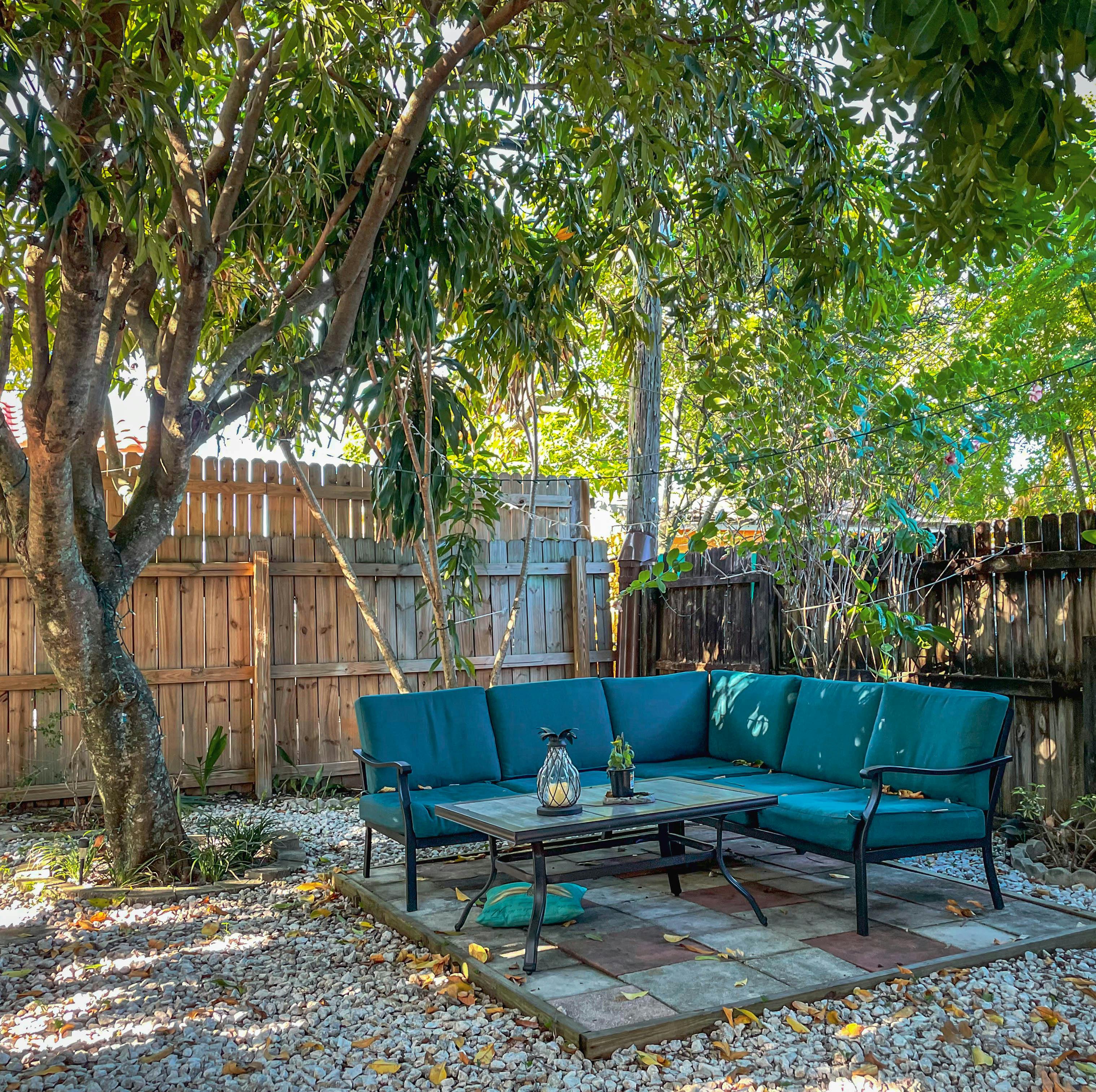
The same analysis applies to homes in high-HOA communities loaded with amenities that require constant and expensive maintenance. Pools, gyms, elevators, community centers. Every one of those amenities is a recurring labor cost, and every one of those costs is escalating in an environment where skilled workers are scarce and getting more expensive. Meanwhile, the properties generating the strongest traffic and the best returns in our portfolio are the ones with simple, practical appeal: fenced yards, good school districts, clean presentations, and reasonable pricing. Low maintenance, high demand.
The landlords managing themselves into bad situations
The accidental landlord wave is adding tens of thousands of new, inexperienced property owners to a market that is already punishing even experienced ones. And the vast majority of these new landlords are making the same handful of mistakes that we have spent 20 years trying to correct.
They are pricing based on their mortgage payment instead of the rental market. They are accepting the first applicant who expresses interest instead of screening rigorously. They are writing 12-month leases that expire in December, the absolute worst time to find a new resident. They are deferring maintenance to save money, creating larger and more expensive problems down the road. They are managing from out of state using Zillow’s free tools and hoping that technology can substitute for local market expertise and vendor relationships.
A Denver property manager quoted in the coverage noted that about half of his incoming leads are now owners who “can’t sell.” He also observed that only about 15% of accidental landlords who say they will rent for a year or two and then sell actually follow through. The rest discover that the rental income is too valuable to give up, or that the sales market never recovers enough to make selling worthwhile. They become permanent landlords by default, still operating with the tools and mindset of someone who thought this was temporary.
That is a recipe for compounding losses. And in this market, with costs rising, vacancy elevated, and the margin for error as thin as we have ever seen it, the difference between an owner who is making data-driven decisions with professional support and one who is winging it is not 5% or 10%. It is the difference between building wealth and bleeding cash.
We have published actual case studies showing 83% net operating income on properties managed through the entirety of COVID. The industry average for small landlords hovers closer to 50-60%. We estimate a great manager outperforms a slightly below-average one by roughly 30% over the long run. On a $2,000/month rental, that is the difference between approximately $16,000 and $20,000 in annual net income. Every single year.
What this market actually demands from a property manager
In an easy market, mediocre management can hide behind a rising tide. Rents go up, vacancy stays low, and almost everyone looks competent. This is not that market. This market exposes every weakness in every operation. Sloppy pricing leads to months of vacancy. Weak screening leads to broken leases. Poor lease timing leads to dead-season turnovers that cost thousands. Reactive maintenance leads to emergency repairs at premium rates during a labor shortage.
What this market demands is precision. Accurate, data-driven pricing that reflects what the market will actually pay, not what the owner hopes for. Rigorous screening that identifies residents who will pay reliably, stay long-term, and care for the property. Strategic lease structuring that avoids the Christmas and mid-winter dead zones. Proactive maintenance that catches problems before they become emergencies. Vendor relationships deep enough to get quality work done at fair prices in a labor market where 92% of construction firms report hiring difficulty.
We have spent nearly two decades building exactly this. Our systems, our data, our vendor networks, our pricing models, our screening standards, and our lease timing strategies were all forged through market cycles that tested every assumption. This is the market all of that preparation was for.
The accidental landlord who just inherited the rental market does not have any of this. The self-managing owner who has been getting by on good luck and a strong market does not have it either. And the discount property manager who wins clients on fees but delivers average results is going to fail them in a market where average is not good enough.
The property manager you need right now is not the one with the lowest fee or the friendliest phone manner. It is the one who will send you the most cash at the end of the year. That is all that matters. Every dollar of vacancy avoided, every quality resident placed, every dead-season lease expiration prevented, every maintenance problem caught early adds directly to your bottom line. In a market this difficult, those dollars are the difference between an investment that builds wealth and one that drains it.
This market rewards precision. Let’s start with yours.
Whether you are an accidental landlord, a self-managing owner who is struggling, or an experienced investor looking for better results, it begins with knowing what the market will actually pay for your property. We do thousands of these every year across seven Sunbelt metros.
Get Your Free Rental Estimate