


From Y’all Street to the Queen City: How Two Sunbelt Titans Are Reshaping Rental Property Investment
MoveZen Property Management announces DFW expansion, backed by nearly two decades of award-winning Sunbelt market expertise
MoveZen Property Management | March 2026
Dallas-Fort Worth is coming for Charlotte’s banking crown, and the stakes have never been higher for rental property investors in both metros. A recent Axios Charlotte report revealed that DFW has quietly assembled the second-largest concentration of financial workers in the country, Goldman Sachs is building a $500 million tower downtown, and a Texas delegation branding itself “Y’all Street” is actively recruiting Wall Street firms to relocate. For MoveZen Property Management, voted Charlotte’s Best in property management by the Charlotte Observer, this rivalry isn’t just a headline. It’s the catalyst behind our expansion to Dallas-Fort Worth this winter, and a signal that Sunbelt rental markets are entering a new era of opportunity.
The Numbers Behind the Rivalry
We talk a lot about “doing the math” at MoveZen, so let’s start there. The Dallas-Fort Worth metro produced $744.7 billion in GDP in 2023, ranking fifth among all U.S. metropolitan areas and accounting for 3% of the entire nation’s metropolitan output. If DFW were a sovereign nation, its economy would rival the top 30 on Earth. Over the last decade, the region’s real GDP grew at a 3.9% compound annual rate, significantly outpacing the 2.5% national metro average.
Population growth is equally compelling. The DFW metro added more than 170,000 new residents in a single year, leading the nation among large metros. Projections for 2026 show more than 25,000 new households forming, with median household income now around $92,000, up more than 5% year over year. North Texas added 127,000 jobs in 2025 alone, and its employment base is now within 150,000 jobs of Los Angeles, making DFW the third-largest employment center in the country.

Meanwhile, Charlotte isn’t standing still. CNBC named Charlotte the No. 1 city on its 2025 Power City Index, surpassing Silicon Valley and Washington, D.C. The Charlotte Regional Business Alliance reports the region has 113% more Fortune 1000 headquarters per capita than the national average. An average of 157 people move to the Charlotte area every single day. These two metros aren’t just growing. They’re pulling away from the pack.
Charlotte vs. Dallas-Fort Worth: The Tale of the Tape
| Metric | Charlotte Metro | DFW Metro |
|---|---|---|
| Metro GDP (2023) | $208B | $744.7B |
| Financial services workers | ~125,000 | ~382,000 |
| Annual population growth | ~57,000/yr | ~170,000/yr |
| Median household income | ~$72,000 | ~$92,000 |
| State income tax | 4.5% (NC) | 0% (TX) |
| County property tax rate | ~0.75% (Mecklenburg) | ~1.7% (Dallas Co.) |
| Fortune 1000 HQs per capita | 113% above national avg | At national average |
| Stock exchanges | 0 | 3 (TXSE, NYSE TX, Nasdaq) |
| Jobs added (2025) | Strong growth | 127,000+ |
The contrast tells a nuanced story. Charlotte punches dramatically above its weight in corporate headquarters per capita. DFW counters with sheer scale: a labor force nearly three times larger, zero state income tax, and three stock exchanges now operating in the metro. But Charlotte holds a critical advantage for property owners that the banking rivalry headlines often obscure. Mecklenburg County’s property tax rate runs roughly 0.75%, compared to Dallas County’s approximately 1.7%. For property owners, that nearly 1% difference on assessed value translates directly to Net Operating Income. On a $350,000 property, we’re talking about $3,325 per year in additional tax burden in Dallas.
As Axios reported, Scotiabank chose Dallas over Charlotte for its $60 million U.S. regional hub with 1,020 jobs, even though Charlotte offered $19 million more in local and state incentives. North Carolina officials acknowledged that the aggressive incentive package was meant to offset “differences” from Texas in operational costs, including construction and taxes. These cities represent two distinct models of Sunbelt economic growth, and smart property investors can benefit from understanding both.
$744.7 Billion
DFW metro GDP, ranked 5th in the U.S. and growing at 3.9% annually. Charlotte counters as CNBC’s No. 1 Power City.
See what your property could earn in either market →Why We’re Expanding Now: The Institutional Retreat Creates Opportunity
We have watched the DFW market for years. What pushed us from watching to acting is a convergence of factors that align precisely with the type of property owner we serve best.
Large institutional investors are now net sellers of single-family rental homes across every major metro. Research from Parcl Labs shows that in Dallas specifically, investors own 9.2% of the housing stock but account for 22.8% of new for-sale listings. Invitation Homes sold 1,356 homes in 2025 while shifting almost exclusively to newly constructed build-to-rent acquisitions. Institutional buying peaked in 2021 and has since contracted by 65% as capital costs and interest rates rose. A record 30% of single-family home purchases in the first half of 2025 were made by investors, but the composition of that group has fundamentally changed.

Mom-and-pop investors, those with fewer than 10 properties, now drive the market. They account for more than 60% of all investor acquisitions in 2025, up from 50% in 2021-2022. Owners of one to five properties represent 87% of all investor-owned homes. These are exactly the property owners MoveZen was built to serve. They need a property management partner who treats their investment like our own home, because for most of them, a rental property represents a significant portion of their net worth.
On the East Coast, we’ve faced a frustrating and accelerating trend. More and more potential rental inventory in our existing markets is being permanently transferred from the individual investors we’ve historically served to large corporate operators. These institutional players have no interest in our resident satisfaction model. They optimize for quarterly earnings reports, not long-term relationships. They don’t care about our data showing that resident satisfaction directly drives Net Operating Income through lower turnover, fewer vacancy days, and better property care. Nearly 9% of residential parcels in 500 U.S. counties are now owned by a corporation, with concentrations exceeding 20% in some cities.
DFW offers a bigger stage for a proven model. It’s the largest rental market in Texas, with 8.3 million residents and the kind of broad-based economic diversity that insulates against single-sector downturns. The Urban Land Institute and PwC ranked DFW as the No. 1 market to watch in their Emerging Trends in Real Estate 2026 report. And critically, the same institutional retreat happening nationally is creating space in Dallas for a relationship-driven management company that serves individual investors with institutional-quality systems.
Curious about your rental income potential?
Our free calculator shows projected cash flow, vacancy impact, and net returns. Whether you own in Charlotte or are evaluating DFW, the math tells the story.
Run the numbersThe DFW Rental Market: A Cyclical Reset, Not a Structural Decline
We wouldn’t be MoveZen if we didn’t address the data that might give investors pause. DFW’s rental market has experienced a supply-driven recalibration over the past 18 months. Vacancy rates climbed above 10%, rent growth turned negative for the first time in years, and approximately 60% of multifamily properties across DFW offered concessions. Some northern suburban communities were advertising six to eight weeks of free rent.
The conventional take: DFW is oversupplied and struggling.
Our take: this is exactly the kind of cyclical reset that creates the best entry points for disciplined investors.
Development activity has declined sharply. Total units under construction dropped from 65,000 in Q2 2023 to approximately 36,000 as of early 2025, aligning with pre-pandemic averages. Construction starts fell further in 2024, which means the supply pipeline is thinning fast. Meanwhile, single-family home prices in DFW are now roughly 40% higher than in 2019, while cumulative rent growth over the same period was only 16%. That widening gap between the cost to buy and the cost to rent is the single most powerful driver of sustained rental demand.

| DFW Market Indicator | Current Status | 2026 Outlook |
|---|---|---|
| Units under construction | ~36,000 (down from 65,000) | Declining toward floor |
| Vacancy rate | ~10.7% | Expected rebound |
| Rent growth | -1.5% YoY (2024-25) | Positive by mid-2026 |
| Home price vs. rent gap | 40% price rise vs. 16% rent | Sustains rental demand |
| Household formation | 25,000+ projected | Accelerating |
| Median household income | ~$92,000 | Up 5%+ YoY |
| Unemployment | ~2.5% | Well below national avg |
| Home closings forecast | Reset from pandemic peak | +15-16% growth projected |
The workforce housing segment outperformed other property classes in 2024, with occupancy rates just below 92%. For single-family rental investors, the market is returning to sustainable levels after the overheated pandemic years. Major research firms project home closings rising 15-16% in 2026, with starts up about 8% and prices increasing modestly by 3%. Homebuilder confidence surveys show that nearly two-thirds of executives plan to expand operations in the metro, supported by DFW’s roughly 2.5% unemployment rate.
If you’re weighing the numbers on a DFW rental investment, our vacancy cost calculator can help you model different scenarios. At $60-100 per day in lost rental income, every vacant day matters more than most property owners realize.
Charlotte: The Foundation We’re Building From
Expanding to DFW doesn’t mean we’re leaving Charlotte. Charlotte is our home. It’s where we’ve spent nearly two decades proving that treating residents like valued customers, not just rent checks, produces measurably better financial outcomes for property owners.
That commitment was recognized when our Charlotte office earned the award in the Charlotte Observer’s prestigious “Charlotte’s Best” competition for property management. In a major metropolitan market, we were the only residential property management company to receive the honor in 2025, recognized alongside two very large commercial real estate companies with significantly more resources and market presence. That award belongs to our customers. Every vote came from someone who trusted us with their property and felt we earned that trust through results, not promises.
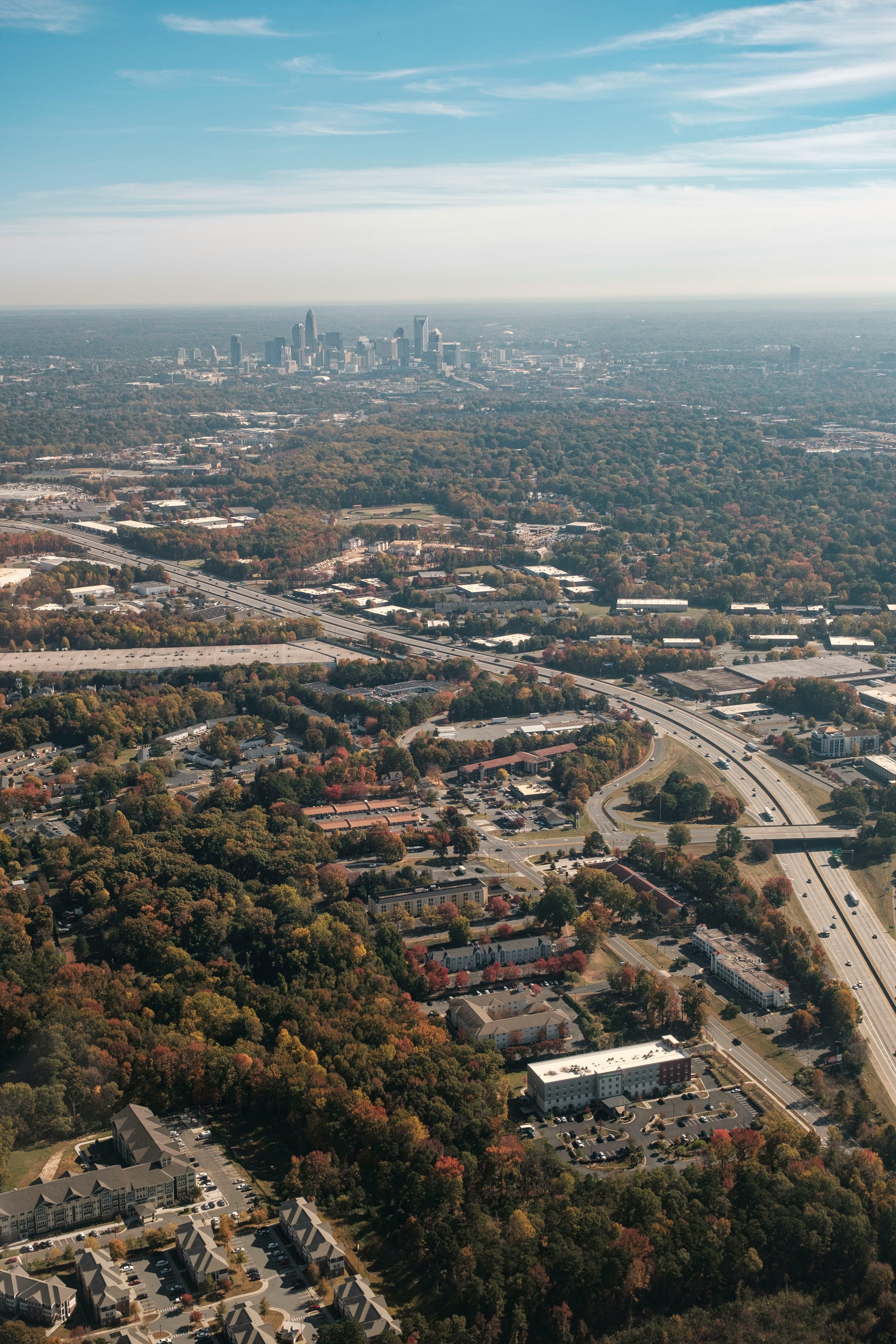
Charlotte’s advantages for property owners remain substantial. The region’s lower property tax rate versus Dallas is real money: roughly $3,325 per year on a $350,000 property. The concentration of Fortune 1000 headquarters drives high-income employment that sustains premium rental demand. And the economic competition with Dallas is actually driving more corporate investment, job growth, and population inflow to Charlotte as the city fights harder for every relocation deal.
Get your free rental estimate for Charlotte or DFW · No commitment, no hassle.
What We’re Bringing to DFW (and What We’re Not)
Expanding to a new market isn’t just about opening an office and putting up a website. We’ve learned that lesson the hard way over nearly 20 years. What we’re bringing to Dallas-Fort Worth is a management philosophy that has been stress-tested through the 2008 housing crash, the pandemic, and the most volatile rental market in 15 years.
The cheapest property manager saves you money: FALSE. We’ve documented this extensively across seven markets. A discount manager saves a property owner a few hundred dollars per year in fees while costing them thousands in extended vacancies, below-market rents, deferred maintenance, and resident turnover. The math: a single additional vacancy week at $75/day costs $525. A resident who stays an extra year instead of leaving saves $3,000-5,000 in turnover costs. The management fee difference between a discount operation and a quality one typically runs $500-$1,200 per year. The numbers aren’t close.
Corporate operators provide better management because they have more resources: FALSE. The FTC fined Invitation Homes for systemic maintenance failures and deceptive practices. Corporate operators optimize for portfolio-level metrics, not individual property performance. Their residents are account numbers. Our residents are people whose satisfaction directly determines our owners’ bottom-line profit. We have the data from seven markets and nearly two decades to prove this approach delivers superior Net Operating Income.

The DFW property management landscape is dominated by either massive corporate operators who treat your property like a line item on a quarterly report, or very small operations that lack the systems and data to optimize performance. MoveZen fills that gap: institutional-quality technology and analytics, delivered with the personal attention and resident-first philosophy of a family-owned company that has been doing this since 2006.
60%+ of all investor acquisitions
Mom-and-pop investors with fewer than 10 properties now drive the single-family rental market. MoveZen was built for these investors.
See how we manage your investment differently →What This Means for Property Owners in Both Markets
Whether you own rental property in Charlotte, are looking at DFW as an investment market, or have holdings in both metros, the Charlotte-Dallas rivalry is creating opportunities that disciplined investors can capitalize on.
For Charlotte property owners: The economic competition between Charlotte and Dallas is driving corporate investment, job growth, and population inflow to both cities. Charlotte’s status as CNBC’s No. 1 Power City, combined with its lower property tax rate and concentrated Fortune 1000 headquarters, means rental demand remains strong. Our Charlotte team, the same people who earned the Charlotte Observer recognition, continues to manage properties with the same intensity and attention to resident satisfaction that made that recognition possible.
For DFW investors and owners: You’re operating in one of the largest and most dynamic economies on the planet. But the current market reset, with supply thinning, the buy-vs-rent gap widening, and household formation accelerating, represents the kind of entry opportunity that doesn’t come around often. Having a property management partner who understands Sunbelt market dynamics and has weathered multiple cycles is essential to capitalizing on it.
For investors in both markets: Charlotte and DFW together offer genuine geographic diversification with correlated but distinct economic drivers. Charlotte gives you Fortune 1000 concentration and lower property taxes. DFW gives you sheer scale, zero state income tax, and the broadest economic base in the Sunbelt. A portfolio across both metros is well-positioned regardless of which city wins any particular corporate relocation deal.

Two Cities, One Standard
The Axios headline framed Charlotte and Dallas as rivals. We see them as complementary: two Sunbelt metros with strong economic fundamentals, growing populations, and rental markets that reward disciplined, data-driven property management. Charlotte is where we built our reputation. DFW is where we’re bringing it next.
We are MoveZen Property Management. We’ve been doing this for nearly 20 years across seven metros, and soon, eight. We were voted Charlotte’s Best. We made the Inc. 5000. And we did it by proving one contrarian idea over and over: that treating residents well is the single best investment a rental property owner can make.
DFW, we’ll see you this winter.
MoveZen Property Management
Charlotte · Raleigh · Wilmington · Greenville · Greensboro · Rock Hill
Coming Winter 2026: Dallas-Fort Worth
Get Your Free Rental Rate Estimatemovezen360.com | 704.228.8385
Sources: Axios Charlotte, Axios Dallas, U.S. Bureau of Economic Analysis, Dallas Federal Reserve, Charlotte Regional Business Alliance, CNBC Power City Index, Parcl Labs, Realtor.com, CoStar, HousingWire, Urban Land Institute/PwC Emerging Trends in Real Estate 2026, U.S. Census Bureau, Dallas Regional Chamber, BatchData, Scotsman Guide, CNBC.