





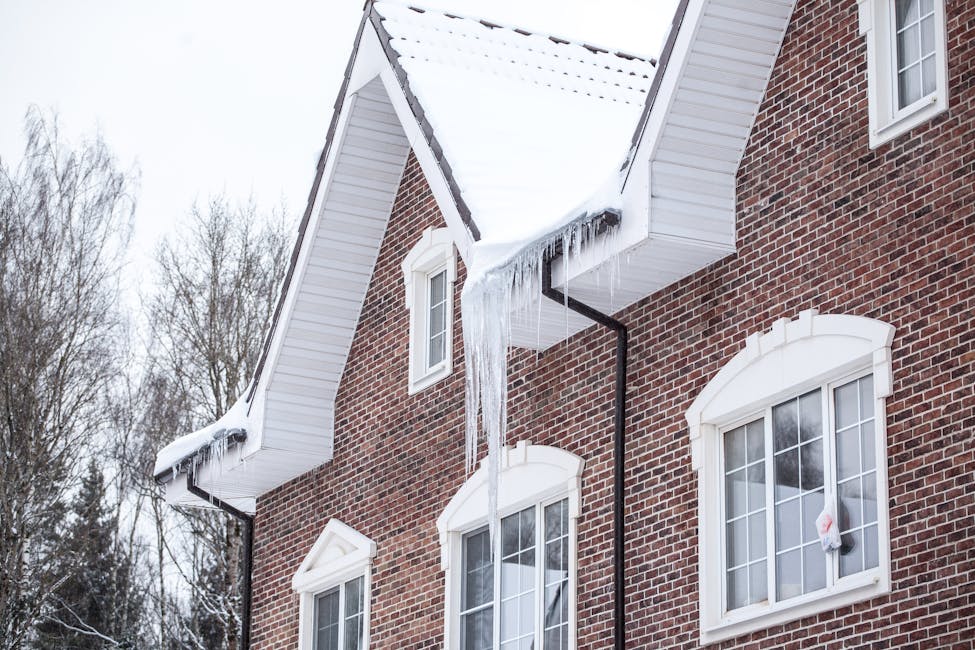
Last week’s winter storm did more than knock out power and close schools. It revealed something we’ve been tracking for months: the 2025 homebuying market runs on razor-thin margins where a single week of bad weather can crater mortgage applications by 14%.
Here’s what happened while buyers stayed home sipping hot chocolate.
Get a Free Virtual Rental Evaluation Plus a Custom Cost Quote
The Numbers Tell a Clear Story
Mortgage rates dropped to 6.21% from 6.24%. That three-basis-point decline should have been irrelevant. Instead, it continued a trend we’ve watched since rates peaked above 7% last year. Refinance applications are up 117% year-over-year, which tells us thousands of homeowners who locked in 7%+ rates are now calculating whether a 6.2% refi pencils out after closing costs.
Meanwhile, purchase applications fell 14% week-over-week. The Mortgage Bankers Association blamed Winter Storm Fern, and they’re partially right. But the more interesting data point: purchase applications were only 4% higher than the same week last year. That’s the weakest annual increase since April 2025.
Translation: the spring buying surge everyone predicted still hasn’t materialized.
What This Means for Property Managers
We manage portfolios across markets where buyer activity directly impacts rental demand. When purchase applications stall, we see it in our leasing velocity within 60-90 days. Potential buyers who can’t close on a home need somewhere to live, which typically means renting for another 12-18 months while they wait for their “perfect market conditions.”
Those conditions rarely arrive on schedule.
The current market rewards decisiveness. Mortgage rates have been trading in a tight range for weeks now, bouncing between 6.2% and 6.4%. That stability should trigger action, but we’re seeing the opposite. Buyers are waiting for rates to drop below 6%, sellers are waiting for prices to rebound, and investors are waiting for clarity on Federal Reserve policy.
Everyone’s waiting. Nobody’s transacting.
The Hidden Opportunity
Here’s what the data doesn’t capture: rental properties in stable neighborhoods are generating predictable cash flow while prospective buyers sit on the sidelines calculating theoretical savings from quarter-point rate drops. We’ve seen this pattern before, most recently in 2018-2019 when rates hovered in the mid-6% range and buyers kept predicting an imminent crash that never came.
Properties we acquired during that “wait and see” period have appreciated 35-40% while generating positive cash flow every month. The investors who acted bought at prices that look brilliant in hindsight. The ones who waited bought at higher prices in 2020-2021, or they’re still waiting.
A 6.21% mortgage rate is not expensive by historical standards. From 1971 to 2021, the average 30-year fixed rate was 7.76%. The sub-3% rates of 2020-2021 broke people’s brains. Buyers anchored to those numbers, convinced anything above 4% was “too high” to justify purchasing. They’re now competing against investors who understand that 6.2% on a cash-flowing asset beats 5.0% on a savings account after inflation.
What Happens Next
Mortgage rates ticked up this week to their highest level in two weeks, though “highest” is doing heavy lifting when the range is this compressed. Rates moved on stronger-than-expected manufacturing data, which signals economic resilience that could keep the Federal Reserve from cutting rates as aggressively as markets hoped.
We’re modeling scenarios where rates stay in the 6-7% range through 2025. Not because we have a crystal ball, but because building underwriting assumptions around permanently low rates is how investors got crushed in 2022-2023.
The properties we’re buying today pencil at 6.5% rates with conservative rent growth projections. If rates drop to 5.5%, we’ll refinance and boost returns. If they stay at 6.5%, we still hit our return targets. If they rise to 7.5%, we’re protected by buying at prices that work at today’s rates, not tomorrow’s hopeful projections.
Important Steps to Rent Your Home Out from A to Z
Step by step checklist for getting a home rented, and link to the full property management guide
1 Consider strengths and weaknesses for your home and location and consider special strategies to utilize them. Is it a college area? If so, you’ll likely handle a lot differently from low income, or a suburb.

2 Get the property in show-ready condition by handling repairs, but also low-cost aesthetic fixes like spray painting rusted AC grates, and other things that really stand out. A sure way to attract sub-par tenants and repel the rest is to show a home with unrepaired issues.
3 Decide whether you’re going to allow pets or not. Before you decide, know that for most landlords it’s the single best thing you can do to increase your “bottom line” profit over the long term. More on this subject here
4 Set a rental rate that will balance a minor amount of time on market hassle, with monthly rate. Whether in the form of owner-occupied showings, stress, or vacancy. Most owners fail to properly account for these subtle but real costs, especially vacancy. Vacant homes are much more costly than most account for. We can provide a free rental rate estimate compiled by people, not an algorithm, here
The Bottom Line
Winter Storm Fern knocked mortgage applications down 14% in a single week. That’s temporary. The broader trend is more concerning: buyers are paralyzed by indecision while rental demand stays robust. Property managers are signing leases at strong rates because our prospective residents can’t or won’t commit to purchasing in this environment.
This creates an opportunity for investors who can act while others wait for perfect conditions that may never arrive. We’ve seen this movie before. The investors who sat out 2010-2012 waiting for lower prices watched the best buying opportunity in decades slip away. The ones who deployed capital during uncertainty built generational wealth.
The market doesn’t reward patience. It rewards calculated action backed by conservative underwriting. Winter weather may slow mortgage applications for a week, but the underlying dynamics haven’t changed: strong rental demand, limited inventory, and buyers who keep waiting for conditions that might not materialize until after prices have already moved higher.
We’re not suggesting investors ignore risks or buy recklessly. We’re suggesting that waiting for perfect clarity is itself a risky strategy with quantifiable opportunity costs. Every month spent waiting is a month of rental income you didn’t collect and equity you didn’t build.
The storm passed. The hesitation continues. And that hesitation is creating opportunities for investors willing to act.
To read more about this topic, visit Rough winter weather hits homebuyers, tanking mortgage demand.