


Spring 2026 Was Supposed to Save the Rental Market. It Might Make Things Worse.
National rents have now declined year over year for nearly three straight years, and the latest Apartment List data shows March 2026 posted the weakest annual rent growth in the history of their index going back to 2017. Our own internal showing traffic across seven Sunbelt metros has dropped noticeably over the past two weeks, right when it should be accelerating. If spring fails to deliver the seasonal demand bump that property owners count on every year, the fall could be genuinely painful.
The numbers are not ambiguous
Apartment List released their March 2026 national rent report this week, and the headline figures are stark. Year-over-year rent growth nationally sits at negative 1.7%, the lowest reading in the entire history of their estimates going back to 2017. That surpasses even the early pandemic dip. The national median rent ticked up 0.4% month over month in March, which sounds positive until you realize last March it rose 0.6%. The seasonal bounce is getting weaker, not stronger.
National vacancy now stands at 7.3%, the highest level Apartment List has ever recorded. Units are sitting on the market an average of 38 days before leasing, five days longer than a year ago and more than double the pace from the peak of the pandemic rental frenzy. The supply wave from 2024 and 2025, when over a million new multifamily units hit the market across those two years, is still being absorbed. And demand is not cooperating.
The Sunbelt is bearing the worst of it
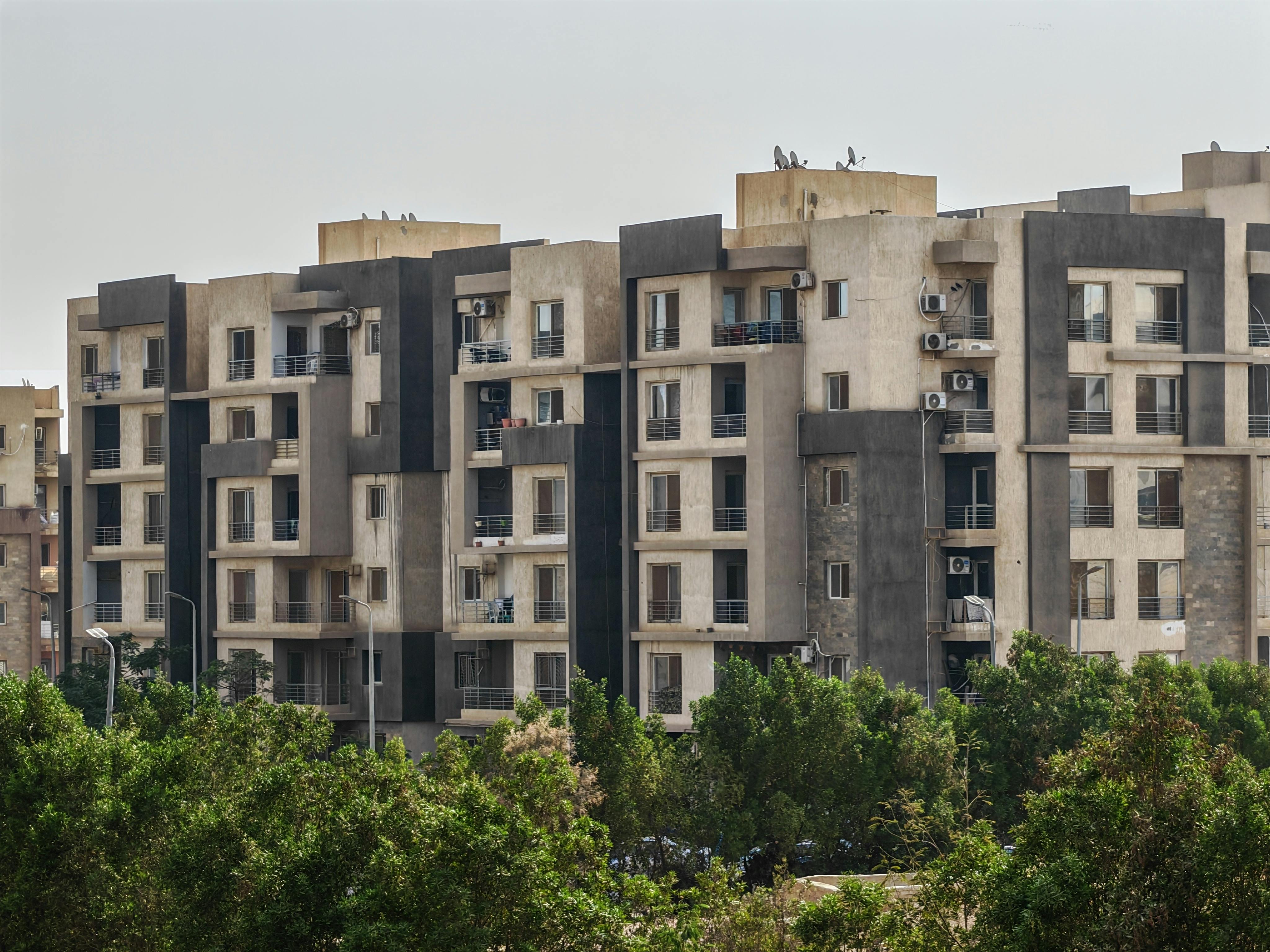
We have been writing about falling Sunbelt rents since mid-2023, and three years in, the trend has not reversed. Among the ten metros with the sharpest annual rent declines, nearly all are in the Sunbelt. Austin continues leading the nation with rents down roughly 6% year over year. San Antonio, Denver, Phoenix, Tampa, and Orlando are all posting significant declines. Charlotte rents are down approximately 1% annually, with the metro adding nearly 18,000 apartment units over the past two years alone.
Charlotte had the second highest percentage of new multifamily inventory relative to existing stock among major metros at 7.4%, trailing only Austin at 8.6%. That is an enormous amount of new competition entering the market while demand softens. Meanwhile, rents are climbing in the Midwest and Northeast where building is harder and supply is constrained. Virginia Beach leads the nation at 5.5% growth. San Francisco is surging on AI hiring. Chicago is up nearly 4%. The rental market is splitting in two, and the Sunbelt is on the wrong side.
-1.7% year over year
The weakest annual rent growth in Apartment List’s index history, going back to 2017. Every vacant day costs owners $60 to $100.
Calculate what vacancy is costing you →Our internal data is flashing a warning
Here is what concerns us most right now. We manage residential rentals across Charlotte, Raleigh, Wilmington, Greenville, Greensboro, Rock Hill, and Atlanta. Our internal showing and inquiry data over the past two weeks has shown a notable slowdown in rental traffic, and this is happening during what should be the beginning of the spring acceleration. Late March and early April are supposed to be when the phones start ringing more, online inquiries pick up, and showing schedules fill out. That has not happened yet this year.
Could it reverse? Absolutely. Easter often acts as a psychological starting gun for spring moving activity, and we have seen slow Marches turn into strong Aprils before. But the national data is making that scenario look less likely than usual. A shaky labor market, renewed inflation concerns, and broader economic uncertainty are suppressing the kind of confident household formation that drives spring leasing. People who are nervous about their jobs do not sign new leases.
The 8-week window that makes or breaks the year
Here is something most property owners do not fully appreciate: the vast majority of annual rent rate gains happen during roughly eight weeks in spring. This is when a surge of renters enter the market simultaneously, creating the competition that allows owners to hold firm on pricing or push rents slightly higher. Outside of that window, the leverage shifts to residents. Fall and winter are concession season, when vacancies linger and owners get flexible.
Apartment List has noted a shift in seasonality over the past three years: March has replaced May as the peak month for rent growth. If that pattern holds, we may have already seen the best this spring has to offer, and it was weaker than last year. That creates a compounding problem. If the spring window produces little or no upward pressure on rents, owners enter the fall negotiating season with no cushion. Extremely low demand meets already depressed prices. The math gets ugly fast.
For context: a year ago it looked like annual rent growth was on track to flip positive for the first time since mid-2023. That rebound stalled and reversed. We are now deeper in negative territory than at any point in this cycle. The idea that spring 2026 would be the turning point is looking increasingly optimistic.
What does a professional lease actually look like?
Our lease agreements are built on nearly two decades of managing thousands of rental properties across the Carolinas and Southeast. Download a free sample to see the level of protection and detail that comes standard.
Download a free sample lease →The myth that this corrects itself quickly
“Construction is slowing, so rents will bounce back soon.” FALSE.
Yes, multifamily starts have dropped sharply. Fewer units will hit the market in 2027 and beyond. But the units that were started in 2023 and 2024 are still delivering right now. The expected completions for 2026 remain above the long-run average. And critically, demand is weakening at the same time supply is tapering. You need both sides of the equation to improve for rents to recover, and right now only one side is moving in the right direction.
There is also the immigration factor. Pew Research documented a decline of more than one million in the foreign-born population in just the first half of last year, and further restrictions have continued since. Immigration has historically been a significant driver of rental demand, particularly in Sunbelt metros. Reduced immigration combined with a cautious labor market means fewer new households forming, which means fewer people looking for apartments.

What owners should be doing right now
If you own rental property in a Sunbelt market, this is not the time to test the upper end of your pricing range. The owners who will come through this cycle in the strongest position are the ones who price competitively now, minimize vacancy days, and lock in quality residents before the fall softening. Every vacant day costs $60 to $100 depending on your property, and in a market where units are taking 38 days to lease nationally, those costs compound quickly.
We would also strongly encourage owners with leases expiring in the next 90 days to get ahead of renewal conversations now. Resident retention is always cheaper than turnover, but in a market with this much available inventory, a departing resident can take 30 to 45 days or more to replace. That is $2,000 to $4,000 in lost rent before you factor in turnover costs. A modest rent reduction on a renewal is almost always the better financial decision.
For investors evaluating acquisitions, the silver lining is real: distressed pricing in oversupplied apartment markets creates opportunity for patient buyers, and single-family rentals continue to outperform apartments on occupancy and rent stability. If you are considering renting out a property or want to understand where your home stands in this market, now is the time to get informed, not after the fall softening begins. Get a free rental rate estimate for your property →
The bottom line
The rental market has now been declining since mid-2023. The spring 2026 seasonal bounce was supposed to be the inflection point, and so far it is arriving weaker than expected. Vacancies are at record highs. Time on market is the longest we have tracked. And the eight-week spring window that generates most of the year’s pricing gains is about to land in a market with less demand, more uncertainty, and more available units than at any point in nearly a decade.
If spring disappoints, it will not just mean a weak spring. It will mean a brutal fall, when the already low seasonal demand meets prices that never recovered. Owners who act early, price realistically, and retain good residents will weather this. Owners who wait and hope for a rebound that may not come will pay for it at $60 to $100 a day.
We have been managing rental properties across the Southeast for nearly two decades, through multiple cycles. This one is real, and the data is clear. The time to adjust is now, not after the numbers get worse.
Download a free NC/SC sample lease · Get a free rental rate estimate · More market news