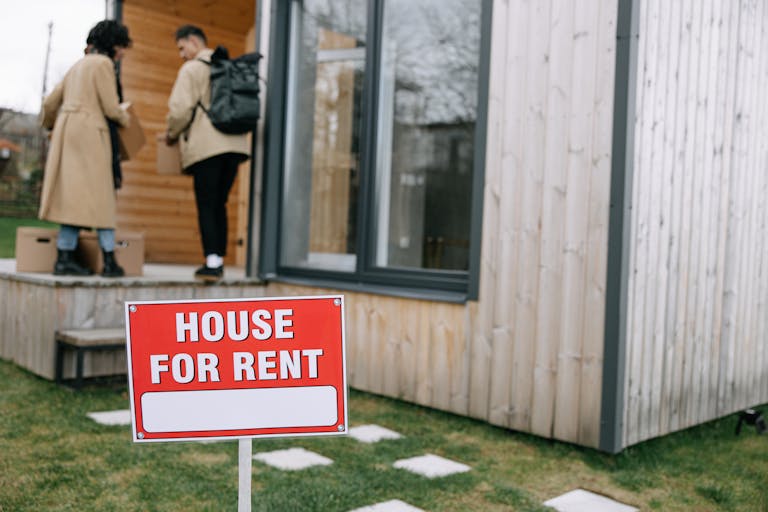





Austin rents dropped 15.2% from peak. Phoenix fell 9%. Denver declined 8.5%. In some markets, Class C workforce housing now costs more per square foot than newer Class A luxury units.
This isn’t what the affordable housing advocates predicted. They argued luxury development drives displacement and raises costs. The actual data shows the opposite: building expensive apartments makes cheaper housing more affordable through filtering.
Get a Free Virtual Rental Evaluation Plus a Custom Cost Quote
The Numbers That Break The Narrative
Bloomberg and Yahoo Finance reported a striking pattern across Sun Belt markets. Luxury apartment supply surged 2021-2024 as developers rushed to meet demand from remote workers and corporate relocations. Austin added roughly 40,000 new luxury units. Phoenix delivered 35,000. Denver, Nashville, and Charlotte each added 15,000-25,000.
Those units now sit 12-18% vacant. Developers overshot demand badly. They’re offering two months free rent, waived deposits, and $1,500 move-in credits to fill inventory. Effective rents on Class A properties dropped below asking rates by $200-400 monthly once concessions are factored in.
Here’s the part that matters: as luxury rents fell, Class B and Class C rents stabilized or declined slightly. The spread between Class A and Class C housing compressed from $600-800 monthly to $200-400 monthly in multiple markets.
In practical terms, a 900-square-foot Class C apartment in Austin that rented for $1,650 in 2023 now rents for $1,550. A comparable 950-square-foot Class A unit with granite counters, stainless appliances, and a pool that asked $2,400 in 2023 now effectively rents for $1,850 after concessions.
The affordable unit became marginally cheaper. The luxury unit became dramatically cheaper. The household earning $65,000 annually suddenly has access to housing quality that was priced $750 per month out of reach two years ago.
Why Filtering Works
Housing markets operate on filtering principles that policy discussions routinely ignore. When new luxury supply enters the market, higher-income households move into those units. This vacates their previous mid-tier or older luxury housing. Those units then become available to households one income tier below.
The process cascades downward. As Class A units absorb high earners, Class B occupancy softens, forcing landlords to compete on price or amenities. Class B rate moderation then reduces pressure on Class C inventory, because households who might have upgraded to Class B instead stay in place or move laterally.
Critics argue this takes too long to help people now. The Austin and Phoenix data shows filtering happened in 18-24 months. That’s faster than any affordable housing program can entitle land, secure financing, and deliver completed units.
The other argument against filtering is that luxury development drives land prices up, making affordable construction impossible. This confuses correlation with causation. Land prices rise in high-demand markets regardless of what gets built. The question isn’t whether land gets expensive. The question is whether adding luxury supply moderates rents faster than restricting supply raises them.
Austin added 40,000 luxury units and rents dropped 15%. San Francisco restricted new development for a decade and rents increased 60% before pandemic-related declines. The filtering model worked. The restriction model failed.
Class C Now Costs More Than Class A
The most striking data point from the Bloomberg analysis: Class C units in some submarkets now command higher per-square-foot rents than Class A properties.
This happens when luxury oversupply creates desperate competition among institutional landlords while older workforce housing remains constrained. A 1970s-era Class C complex with 200 units has stable 94% occupancy and modest turnover. The landlord has no pressure to drop rents. A 2022-vintage Class A complex with 300 units sitting at 78% occupancy will do almost anything to fill vacancies.
The Class C landlord raises rents 3% annually. The Class A landlord offers eight weeks free on a 13-month lease, effectively reducing rent 15%. Within two years, the gap inverts.
For workforce households, this creates genuine opportunity. A resident earning $58,000 annually who previously qualified only for aging Class C housing at $1,600 monthly can now access Class A housing at $1,750 effective rent. The $150 monthly increase buys significantly better housing quality, lower utility costs, and reduced maintenance hassles.
This isn’t theoretical. We’re seeing this pattern in Austin, Phoenix, Charlotte, and Nashville right now.
Developer Pullback: The Mistake That Locks In Affordability
The rational developer response to 15% rent declines and 12-18% vacancy is obvious: stop building. And that’s exactly what’s happening. Multifamily housing starts dropped 50% in these markets over the last 12 months. Developers shelved projects that penciled at $2,200 monthly rents but don’t work at $1,850.
This pullback will rebalance supply within 24-36 months as population growth absorbs existing inventory. But during that window, renters get real affordability through oversupply.
The mistake would be interpreting temporary oversupply as permanent market weakness and restricting future development. That locks in today’s lower rents for perhaps three years, then creates the next supply shortage and rent spike cycle.
The correct response is: encourage continued development, accept cyclical oversupply as the price of long-term affordability, and let filtering work.
What This Means For Small Investors
If you own Class B or Class C rental properties in markets with luxury oversupply, you face a specific strategic choice.
Option one: Maintain current rents, accept slightly elevated vacancy, and wait for supply-demand rebalancing. This works if your properties are paid off or low-leveraged. You can afford 8-10% vacancy for 18 months while luxury inventory absorbs.
Option two: Reduce rents 5-7% to defend occupancy, sacrificing gross revenue to eliminate vacancy costs and turnover friction. This works if you’re carrying significant debt service and need cash flow stability.
Option three: Upgrade your Class C properties to compete with distressed Class A inventory. If luxury units are offering granite and stainless at $1,850 while your Class C units with laminate and white appliances ask $1,600, spending $8,000-12,000 per unit on kitchen and bath upgrades might let you raise rents to $1,750 and capture residents who want Class A quality at below-Class A pricing.
The math on option three is interesting. That $10,000 upgrade investment supports a $150 monthly rent increase. At a 7% cap rate, that’s $25,714 in added property value. You invested $10,000 and created $25,714 in value. The payback period is 5.5 years on cash flow alone, faster if you capture valuation gains.

The Geographic Winners
Not every market has luxury oversupply. The Bloomberg data focused on Sun Belt growth markets that saw massive speculative development. These patterns don’t apply in New York, San Francisco, Boston, or Seattle, where restrictive zoning prevents oversupply regardless of developer interest.
The markets seeing real affordability gains through filtering are:
Austin: 15.2% rent decline from peak, continued job growth, 40,000 luxury units added 2021-2024.
Phoenix: 9% decline, strong population growth, 35,000 luxury units.
Denver: 8.5% decline, stabilizing job market, 18,000 luxury units.
Nashville, Charlotte, Raleigh: 4-7% declines, steady job growth, 15,000-20,000 luxury units each.
These markets require differentiation. Austin and Raleigh both rode the same wave for a decade: tech job growth, corporate relocations, remote work flexibility. Both exploded coming out of 2020-2021. Both slowed dramatically in 2023-2024 as remote work policies normalized and migration patterns cooled.
The critical difference is scale of overbuilding. Austin added luxury inventory assuming the 2021-2022 growth rate would continue indefinitely. Developers penciled projects using absorption rates that evaporated. The result: 40,000 luxury units chasing perhaps 25,000 qualified households.
Raleigh took a breather, not a collapse. The Research Triangle continues adding corporate jobs at steady rates. Apple’s expansion, biotech growth, and university-adjacent development provide structural demand. New luxury supply in Raleigh ran 12,000-15,000 units versus Austin’s 40,000. The market isn’t severely overbuilt. It’s appropriately supplied with modest softness.
This matters for investment strategy. Austin offers distressed buying opportunities but carries reabsorption risk. Raleigh offers stable fundamentals with less dramatic upside but also less downside exposure. For mom-and-pop investors seeking cash flow stability over speculation, Raleigh’s measured supply growth beats Austin’s boom-bust volatility.
Job growth supports long-term demand across all these markets. Luxury oversupply creates short-term affordability. Demographic trends favor continued population gains. But degree of overbuilding determines whether you’re buying at a cyclical bottom or catching a falling knife.
The losing markets are legacy industrial cities with flat population growth and minimal new construction. Rents stay elevated because supply never increases, but demand stays soft because jobs don’t materialize. You get the worst of both: high prices and weak fundamentals.
The Policy Implication Nobody Wants To Hear
If luxury development demonstrably lowers rents through filtering, the obvious policy response is: make luxury development easier, not harder.
Eliminate parking minimums that force developers to build expensive structured parking. Reduce setback requirements that waste developable land. Streamline permitting to cut 8-12 months from approval timelines. Allow greater density near transit and job centers.
The political problem is this message polls terribly. “Build more luxury housing to help poor people” sounds like trickle-down economics rebranded for real estate. Voters hate it. Advocates hate it. It’s politically dead on arrival.
But the Austin data doesn’t care about polling. Fifteen percent rent declines helped tens of thousands of households access better housing at lower cost. That happened because developers built too much luxury inventory, not because the city funded affordable housing mandates.
The mandate-based approach requires taxpayer subsidies, long approval processes, income verification, waitlists, and geographic restrictions on where recipients can live. It helps perhaps 5,000 households per city over five years.
The oversupply approach requires no subsidies, helps every renter in the market simultaneously through price pressure, and works automatically through market forces.
One model scales. The other doesn’t.
What Happens When Supply Absorbs
Current luxury vacancy rates of 12-18% will normalize to 5-7% within 24-36 months as job growth and population gains fill inventory. When that happens, rents will stabilize and begin modest increases again.
This doesn’t erase affordability gains. Rents that dropped from $2,400 to $1,850 might rise to $1,950 or $2,050, not back to $2,400. The filtering cascade already happened. Housing built in 2022 as luxury is now considered standard mid-tier inventory. It won’t command luxury premiums again unless supply severely constrains.
For investors, this normalization phase is the buying opportunity. Distressed luxury properties with 15% vacancy and negative cash flow will sell at discounts to replacement cost. A property that cost $220,000 per door to build might trade at $180,000 per door. When occupancy rebounds to 94% and rents stabilize, that asset will return to $210,000-220,000 valuation.
The risk is catching falling knives: buying too early while vacancy is still rising. The opportunity is recognizing when vacancy peaks and absorption begins. That inflection point typically happens 6-9 months after new development starts collapse, which we’re seeing now in Austin, Phoenix, and Denver.
Ready to Get Your Rental on the MoveZen System?
Our ultimate goal is to maximize your bottom line income while minimizing headaches. This starts with our new owner onboard process
Thinking of Switching Property Management Companies?
Don’t let the unpleasant task of working with your current manager to close out your account hold you back, we’ll do it all. Just notify them once in writing, and we’ll do the rest
The Uncomfortable Truth
Affordable housing advocates spent decades arguing luxury development hurts affordability. The data from 2021-2024 proved them wrong. Markets that built the most luxury inventory saw the largest rent decreases. Markets that restricted development saw continued rent increases.
This doesn’t mean abandon subsidized affordable housing programs entirely. It means recognize that filtering through market-rate development delivers affordability at scale and speed that subsidized programs cannot match.
Austin added 40,000 luxury units in three years and dropped rents 15% for everyone. Inclusionary zoning mandates might deliver 2,000 affordable units over the same timeframe, helping 0.5% of renters while doing nothing for the other 99.5%.
The math is brutal and clear. If you care about affordability, you should support luxury development. Not because you love developers or luxury housing. Because filtering works, restrictions fail, and rent decreases help every renter immediately.
For small investors, this creates opportunity. Markets with luxury oversupply offer buying chances, rent arbitrage between Class A and Class C, and upgrade economics that improve both cash flow and resident satisfaction. The chaos of oversupply is precisely when smart capital gets deployed.