





Tax Strategy · Custom Home Services
Don’t Want Capital Gains Taxes, a Forced Sale, or Landlord Headaches? Custom Home Services Is the Third Option
For owners sitting on decades of appreciation, selling and writing a six-figure tax check is rarely the most rational move. Neither is becoming a reluctant landlord at 68. There is a third path, and almost nobody in the industry talks about it because nobody profits from selling you nothing.

The conventional wisdom says you have two choices when you no longer want to live in a home you have owned for 25 or 35 years: sell it, or rent it out. Both are wrong more often than the industry admits. Selling triggers a tax bill that took the market 30 years to build. Renting it to strangers turns a retired homeowner into a part-time operations manager. Custom Home Services exists for the gap nobody addresses: keep the asset, skip the tax event, and offload the actual work.
Primary CTA
See if your home is a Custom Home Services candidate
Free analysis. We look at carrying costs, tax exposure, and the long-term hold case. If selling is the right answer, we will tell you that too.
The Boomer Equity Trap
A homeowner who bought in the Carolinas in 1990 for $140,000 is, in most metros we serve, sitting on a home worth $550,000 to $850,000 today. The $250,000 single-filer or $500,000 married-filing-jointly capital gains exclusion sounds generous until you do the subtraction. Anything above that threshold gets taxed at 15% or 20% federal, plus the 3.8% net investment income surtax for higher earners, plus state income tax. In North Carolina that state piece adds 4.5%. In South Carolina it can run higher depending on bracket.
For a couple with $400,000 of taxable gain above the exclusion, the federal-plus-state hit lands in the $90,000 to $115,000 range before any selling costs. Add 5% to 6% in realtor commissions on a $700,000 sale and another $35,000 to $42,000 walks out the door. That is real money. It is also money the homeowner spent 30 years quietly accumulating, and it disappears in a single closing.
The kicker: most owners in this position do not actually need to sell. They want to be done with the house. That is a different problem with a different solution.
Quick math, illustrative
$140,000
$700,000
$60,000
$42,000
~$55,000+
Numbers are illustrative. Your situation will vary by state, bracket, basis adjustments, and improvement history. Confirm with your CPA.
The Honest Comparison: Keep vs. Sell-Pay-Reinvest
Most “should I sell?” conversations are framed wrong. The real comparison is not keep vs. sell. It is keep vs. sell, pay the tax bill, pay the commission, and reinvest the net proceeds somewhere else at the risk-free rate or better.
If a $700,000 home becomes $603,000 in net proceeds after taxes and commissions, the relevant question is what that $603,000 has to earn, after tax, to keep pace with what the house was doing. The house was doing two things at once: appreciating at whatever the local market rate is, and providing shelter value (or potential rental income) without an additional tax event each year. Treasuries at 4.5% generate taxable income annually. The home does not.
Now add the keep-side costs honestly. Insurance, property tax, baseline maintenance, occasional larger repairs, and any management fee if the owner is not doing the work personally. In most Carolina markets, those run somewhere between 2.5% and 4% of the home’s value per year, depending on age and condition. That is the actual carrying cost a hold-strategy has to overcome.
For most owners we run this calculation for, holding wins by a wider margin than they expect, especially when the home is rentable at or near break-even on those carrying costs. We have set rental rates on thousands of homes in this region. Break-even is achievable in a lot of these scenarios. Owners just do not know it because nobody has shown them the math.
Carrying a Home Without a Resident: When It Works and When It Doesn’t

Let us address the boldest version of the keep-it argument honestly. Some advisors will tell a homeowner to simply hold a vacant home indefinitely because appreciation will outpace carrying costs. Sometimes that is right. Often it is not.
A vacant home is a real cash drain. On a $700,000 property in our markets, expect roughly $400 to $600 per month in property taxes, $150 to $250 in insurance (often higher for a vacant policy), $50 to $150 in utilities kept on for minimal climate control, and a maintenance reserve that prudently runs $200 to $400 per month against the inevitable. That is $800 to $1,400 every month going out with nothing coming in.
Hold-without-a-resident makes sense in a few specific situations: the owner uses the home seasonally and values that flexibility, the family is planning to move back within 24 to 36 months, the home is being prepared for an heir, or appreciation in the specific submarket is strong enough to clearly outrun the carrying cost. Outside those situations, the math gets harder.
This is where Custom Home Services and traditional rental management actually overlap. For most owners in this position, the right structure is CHS plus a careful, conservative leasing strategy, not one or the other. The home gets the stewardship of a non-rental property and the income offset of a managed rental.
See Also
Thinking about a generational handoff?
If the long-term plan is to keep the home in the family, the math gets more interesting. Heirs inherit at stepped-up basis, which is a powerful and underused tool. We have written a separate piece for owners thinking that direction.
The “I Don’t Want to Be a Landlord” Problem
Some owners are done with the asset emotionally even when the math says hold. They are 70. They have a beach place. They do not want a phone call about a water heater. They especially do not want to make a decision about a resident’s pet, lease renewal, or rent increase. This is reasonable. It is also where the industry fails them.
Traditional property management requires the owner to be involved in dozens of small decisions a year. Approve this repair. Sign this lease. Choose between these three applicants. Decide whether to renew at the asked rate. For an owner who wants to be done, that is barely better than doing it themselves.
Custom Home Services is built for the opposite preference. Full property stewardship without rental obligations. We treat the home like it is our own, because that is the only philosophy we have ever operated under. The owner gets quarterly updates, an annual review, and a phone call when something genuinely needs their attention. That is it.
Three paths compared
Sell
One-time tax bill, commission, lost compounding. Done forever.
Traditional rental management
Income, but ongoing resident decisions and owner involvement. Best for investment-minded owners.
Custom Home Services
Full stewardship, no resident obligations, optional careful leasing layer. Built for owners who want to be done.
Why Holding Quality Housing May Outperform Most Conservative Alternatives
The long-term case for holding is not speculative. The United States is structurally short on housing. Estimates from industry groups put the national shortage between 3.8 million and 7.2 million homes. The Federal Reserve has repeatedly identified shelter inflation as one of the stickiest components of headline inflation, which is policy language for saying housing costs are going to keep rising relative to almost everything else.
Add the demographic layer. The largest generation in American history is moving into prime household-formation years with less ability to buy than their parents had at the same age. That demand is not going anywhere. Quality single-family housing in established Carolina and Virginia markets sits exactly in the path of that demand.
Holding a well-maintained home in this environment is not a swing-for-the-fences play. It is a conservative one. The risk is not appreciation underperforming. The risk is letting the property deteriorate through deferred maintenance, which is the actual reason most long-term holds disappoint. CHS exists in part to prevent that.
What Custom Home Services Actually Does
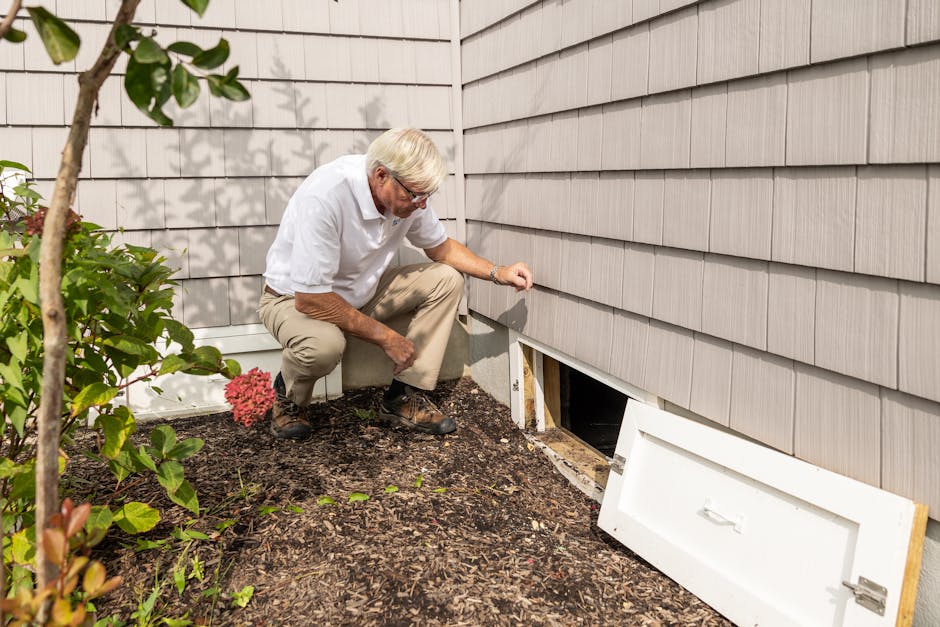
Concretely, here is the work CHS handles so an owner does not have to:
Scheduled property inspections
Interior and exterior walkthroughs on a defined cadence, with photo documentation and a written report.
Maintenance coordination
HVAC servicing, plumbing checks, roof and gutter inspections, pest control, and the small repairs that compound when ignored.
Vendor management
Access to a network of vetted Carolina contractors built over nearly two decades. Pricing the owner could not get on their own.
Seasonal preparation
Winterization, hurricane-season checks on coastal properties, spring HVAC service, fall gutter clearing. Done before something goes wrong.
Emergency response
Water leaks, storm damage, security issues. Our team responds first and informs the owner with options, not problems.
Optional careful leasing
If the owner wants the home to carry itself, we can layer in a long-term, low-turnover lease with the kind of resident our portfolio is built around. Always optional, never required.
This is the work an owner would do themselves if they had the time, the contractor network, the local knowledge, and the inclination. Most do not. Custom Home Services solves that for a defined monthly fee that is typically a fraction of the cost of one preventable problem.
Talk it through
A no-obligation hold-vs-sell conversation
If you are weighing what to do with a home you have owned for decades, give us 30 minutes. We will walk through the actual math for your specific situation, including the case for selling if that is the right answer. No pitch, no pressure. We have done this with hundreds of Carolina owners.
This article is general information, not tax or legal advice. Capital gains calculations depend on your basis, improvements history, filing status, and state. Always confirm with a qualified CPA before acting on a sale-versus-hold decision.