Published
Triangle market analysis
Raleigh Rents Are Down, and the Former Mayor Credits Smart Growth Policy. The Jury Is Still Out
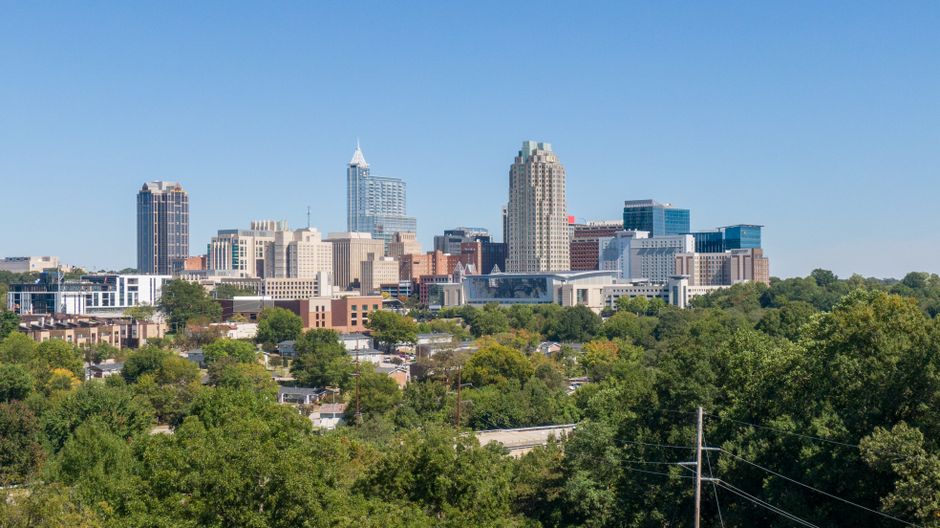
Raleigh rents have fallen sharply while peer Sun Belt cities held firm. Former Mayor Nancy McFarlane says years of pro-construction policy made it happen. We think she’s got a real case. But the luxury pipeline is thinning out, and the lower end of the market could feel it fast if supply tightens again.
What the Former Mayor Said, and Why It Matters
Former Raleigh Mayor Nancy McFarlane sat down with the News & Observer recently and made a direct argument: Raleigh’s rents are falling because Raleigh approved housing. Years of it. Density projects that drew protests. Rezonings that took political capital. Infill that neighbors didn’t want. All of it added up.
She’s largely right, and that matters because most peer Sun Belt cities did not do what Raleigh did. Charlotte, Nashville, Atlanta all grew fast too. Their rents are still elevated. Raleigh’s are not. Something’s different here, and the construction pipeline is the most obvious variable.
Our role in writing this isn’t to score political points. We manage rentals across the Triangle and have for nearly two decades. Our job is to translate what’s happening into something owners and residents can actually use.
Pricing a Raleigh rental right now
Last year’s comps are already wrong
If you’re pricing a Raleigh rental off what it rented for in 2023 or early 2024, you’re probably going to sit vacant. We run custom rent analyses using current market data, not stale comps.
The Numbers: How Far Have Raleigh Rents Actually Fallen
We’re deliberately qualitative here. Public rent indexes vary wildly in methodology, and we’d rather tell you what we’re seeing in our portfolio than quote a Zillow number that gets revised next month. That said, the directional story is clear and consistent across every data source we read.
Rough rent change, 2022 peak to late 2025
down meaningfully
roughly flat
slightly down
roughly flat
Directional comparison based on major rent indexes and MoveZen portfolio observation. Peer cities grew too, but their supply pipelines lagged Raleigh’s.
What we can say with confidence from our own vantage point: this is the steepest sustained rent decline we’ve watched in a vibrant, growing city in nearly 20 years of managing rentals. Growing cities don’t usually give back rent. Raleigh has.
Luxury Construction Trickled Down. That Is Not an Accident
Critics often say Raleigh built too much luxury. That’s partly true and also partly beside the point. New Class A supply doesn’t just serve wealthy renters. It pulls them up and out of older stock. The couple that would’ve rented a nice Five Points bungalow now rents a glass-and-steel one-bedroom downtown. The Five Points bungalow gets listed at a more competitive price. That softens the market a notch below that. And so on down the line.
This is textbook filtering and it’s one of the few things in housing economics that actually works the way the textbook says. Raleigh ran the play.

The filtering chain
New Class A supply opens — downtown mid-rises, amenity-heavy mixed use
↓
High earners move up — vacating older premium stock
↓
Older Class B inventory softens — landlords price to compete
↓
Class C renters catch a break — the hardest-to-help segment finally sees relief
The policy critics who argued that “luxury doesn’t help the working class” got this one wrong. Not because they were cruel, but because filtering takes 3 to 5 years to show up in the data, and most political cycles don’t have that kind of patience. Raleigh waited it out.
The Case for Caution: Why the Low End Could Snap Back Fast
Here’s where we part company with the victory-lap framing. Construction starts are falling nationally and in the Triangle. Developers overbuilt relative to short-term demand, got burned on rents, and have pulled back on new projects. Permits are soft. The cranes we see today are finishing out projects that got financed 18 to 30 months ago.
Population growth in the Triangle has not stopped. Job growth has not stopped. If supply slows and demand continues, the arithmetic reverses. And when it reverses, the softness that benefited lower-income renters is the first thing to disappear, because the filtering chain runs in reverse too. High earners stop vacating premium stock, Class B tightens, Class C tightens behind it.
Our rough read: we have maybe 18 to 24 months of soft rent conditions before the pipeline catches down with demand and the pressure returns. That’s not a prediction, that’s a planning horizon. Owners should be making decisions that work in both scenarios.
What This Means for Raleigh Owners Right Now
Price to the current market, not to last year’s comps. We cannot say this loudly enough. We talk to owners every week who are chasing a number that was accurate in May 2023 and simply isn’t anymore. Pride costs money in a softening market.
Vacancy runs $60 to $100 a day on a typical Triangle single-family rental. Stretch that out 90 days chasing an extra $75 in monthly rent and the math is brutal. You lose roughly $5,400 to $9,000 in vacancy to gain $900 over the first year of the lease. That’s not a close call. That’s a disaster.
The real cost of holding out for $75 more
Quality residents in a soft market are looking for value, not desperation. Overpriced listings attract the renters who have been turned down everywhere else. Priced-right listings attract the stable, long-term households every owner wants. This gets inverted in owners’ heads during soft markets and it costs them real money.
Run the vacancy math on your own property
What’s an extra month of vacancy actually costing you?
Plug in your rent, your days vacant, and your holding costs. The number usually surprises owners.
What This Means for Raleigh Residents
Raleigh residents have more leverage right now than they’ve had in roughly a decade. Shop carefully. Tour multiple options. Negotiate on rent, on move-in incentives, on lease length, on small repairs you’d like done before move-in. Quality operators know the market is soft and most of them will meet you partway.
Industry survey data from AppFolio and others confirms what we’re seeing on the ground: owners increasingly understand that resident experience drives retention, and retention drives returns. The best operators are competing for you now. Use it.

Raleigh resident, 2022
Showed up to 6 showings, got denied at 4, won the 5th by offering over asking.
Market: landlord-controlled
Raleigh resident, 2026
Tours three homes in a week. Each owner offers something: a free month, a reduced deposit, a repair.
Market: resident-favorable
Our Take: Raleigh Handled Growth About as Well as Anyone Could
Change is hard and inevitable in a growing city. Raleigh residents watched their neighborhoods change. Owners watched a long run of rent increases end abruptly. Nobody enjoys either of those things in the moment.
But the alternative was the Charlotte, Nashville, Atlanta path: grow fast, approve less housing, let rents run away from working residents, and then try to fix it later with subsidies and regulation. Raleigh took the hard votes early. Residents got relief faster. Owners who stayed disciplined still have strong long-term fundamentals. That’s a better trade than most cities managed.
We’ll be watching permit volumes, population flows, and our own listing data for the signal that softness is bottoming out. When we see it, we’ll say so.
Stay ahead of the Triangle market
Rent trends shift fast. Our analysis doesn’t gather dust.
We publish ongoing coverage of Raleigh, Charlotte, Wilmington, and the broader Carolinas rental market. Owners and residents both read it.